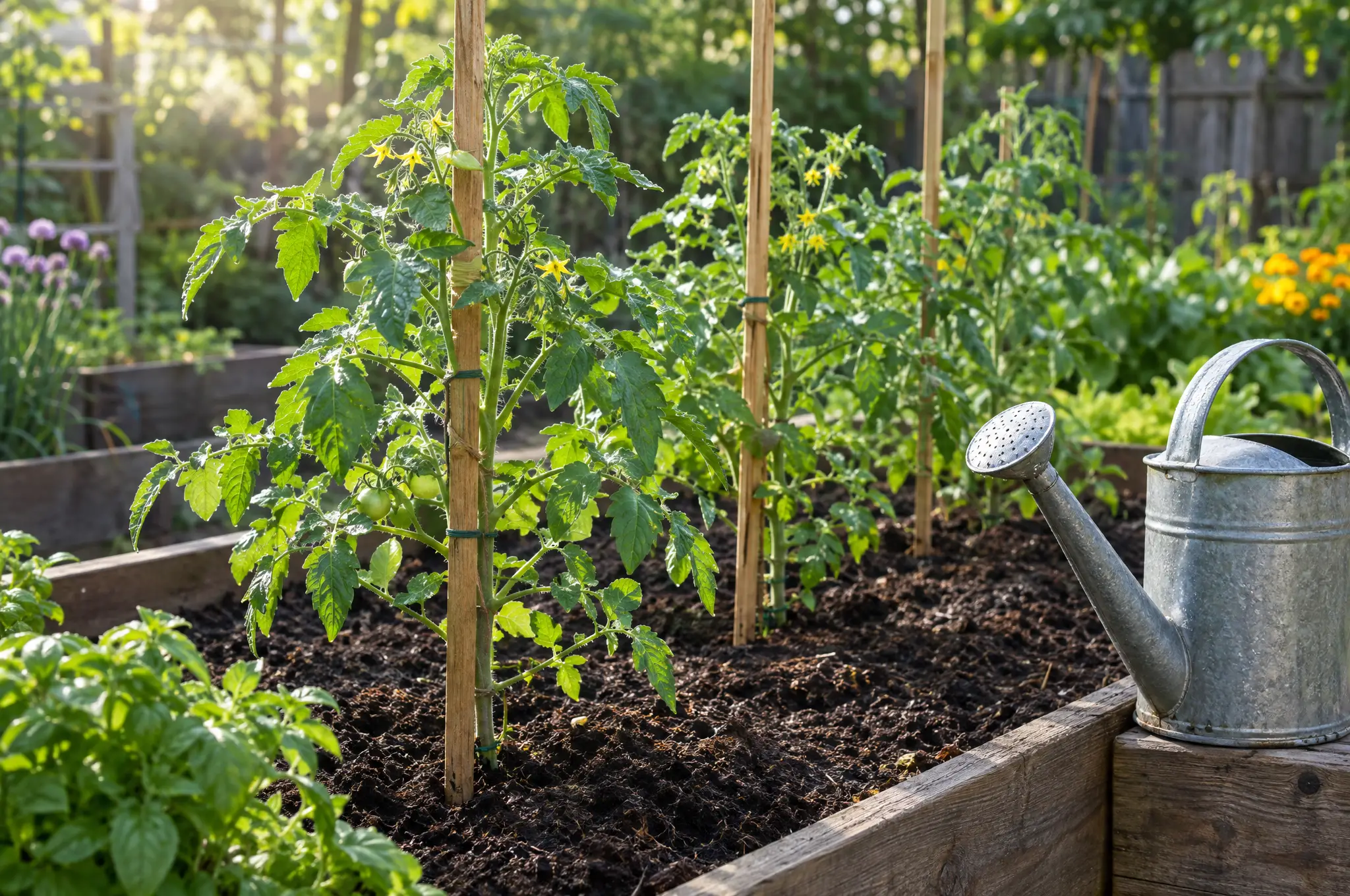
Vegetables need different care as they grow. A simple routine that changes with them, from transplant to harvest, works better than watering on a fixed timetable.
At transplant: settle the roots
Young plants are busy building roots. Water them in well on the day you plant, then keep the soil evenly moist, not soaked, for the first couple of weeks while they settle.
While they grow: water deeply, less often
Once plants put on leaves and start to stretch, water deeply and less often rather than a splash every day. Water at the base of the plant, not over the leaves, and early in the day so the surface dries before evening.
Watch the plant, not the calendar
- Push a finger into the soil: if it’s dry a knuckle down, it’s time to water.
- Containers dry out much faster than beds, so check them every day in hot weather.
- A layer of mulch keeps moisture in and evens out the swings between waterings.
- If growth looks pale or uneven, a soil test tells you more than guesswork.
Keep going through harvest
Tomatoes, peppers and squash keep setting fruit for weeks. Keep the routine going through harvest rather than stopping when the first crop comes in.
Make it one job
Anything you add to your watering is easiest when it’s part of the routine rather than a separate task. Organic Thrive is an organic liquid fertilizer for flowering plants, such as tomatoes, peppers and squash. You dilute it in water and apply once a week as a foliar spray or in irrigation. Use the mixing calculator for the amount, or see Organic Thrive.