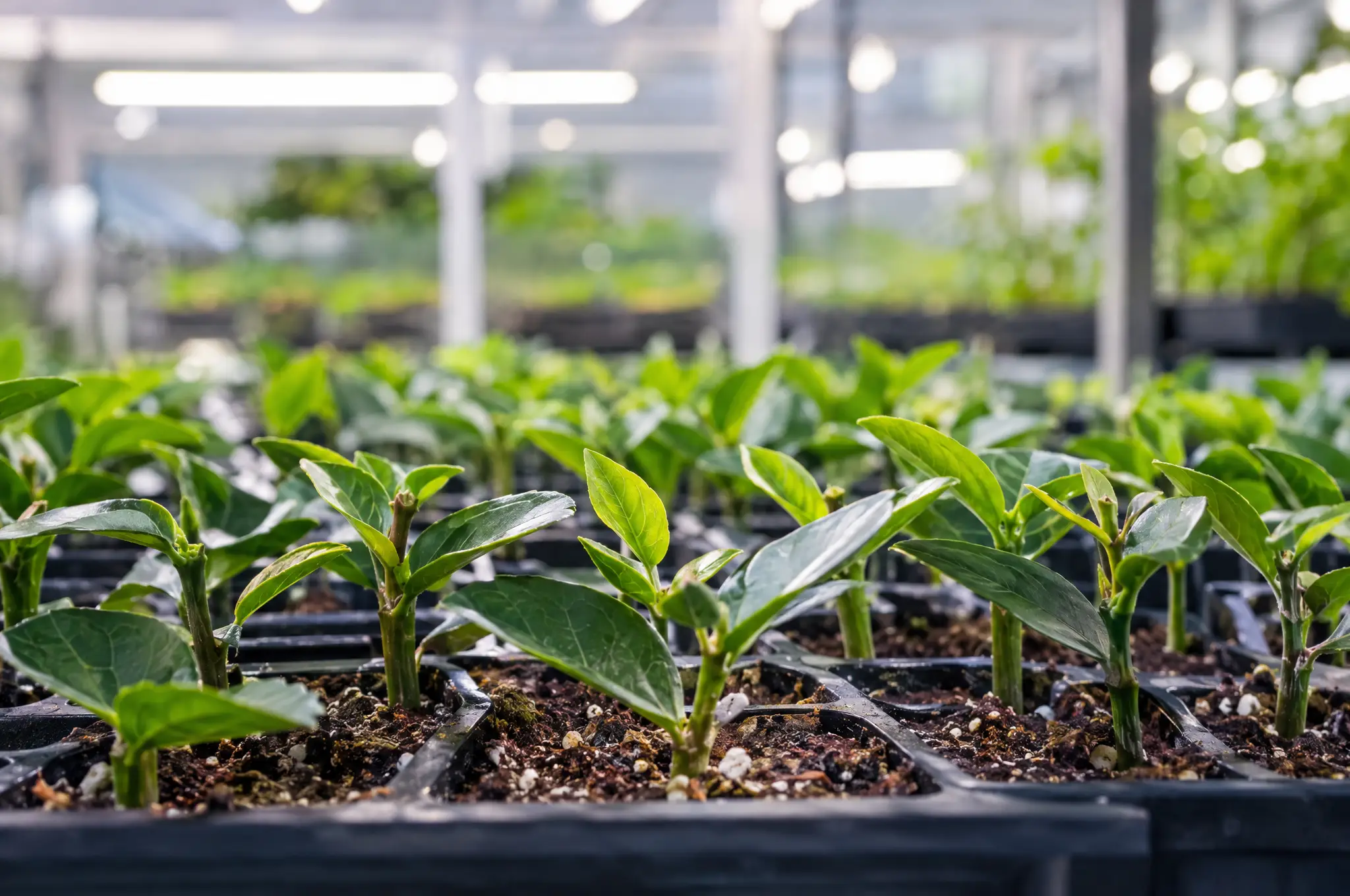
Hop latent viroid, or HLVd, has gone from a niche hop problem to one of the most talked-about threats in cannabis cultivation. Here’s what it is, how it spreads and what growers can do.
What it is
A viroid is smaller and simpler than a virus: a tiny loop of genetic material with no protein coat. HLVd was first described in hops. In cannabis it causes what growers call “dudding”.
What it does
- Stunted, slower growth and smaller plants.
- Brittle stems and changes to leaf shape.
- Less flower and lower quality at harvest.
Many infected plants show no symptoms for a long time, especially mother plants, which is why it can spread widely before anyone notices.
How it spreads
Mostly through sap: on blades, hands and surfaces, and through cuttings taken from infected mother plants. Because it hides in healthy-looking plants, one infected mother can seed a whole facility.
What growers can do
- Test. Lab tests (RT-PCR) detect HLVd before symptoms appear. Test mother plants and new genetics before they join your grow.
- Quarantine. Keep new plants and cuttings separate until they test clean.
- Treat blades as a spread risk. Use fresh or separate blades between plants, and follow current extension guidance on registered disinfectants that work against viroids; studies have found that some common products, including alcohol, are not effective. Organic Fresh is a cleaner, not a disinfectant, and does not treat or prevent HLVd.
- Remove infected plants quickly and clean the area afterwards.
Why we’re raising money
There’s no known treatment for HLVd yet, and better detection and control need research funding. Read about the research initiative.